| 1 |
Weight, Height, Body mass index |
X |
X |
| 2 |
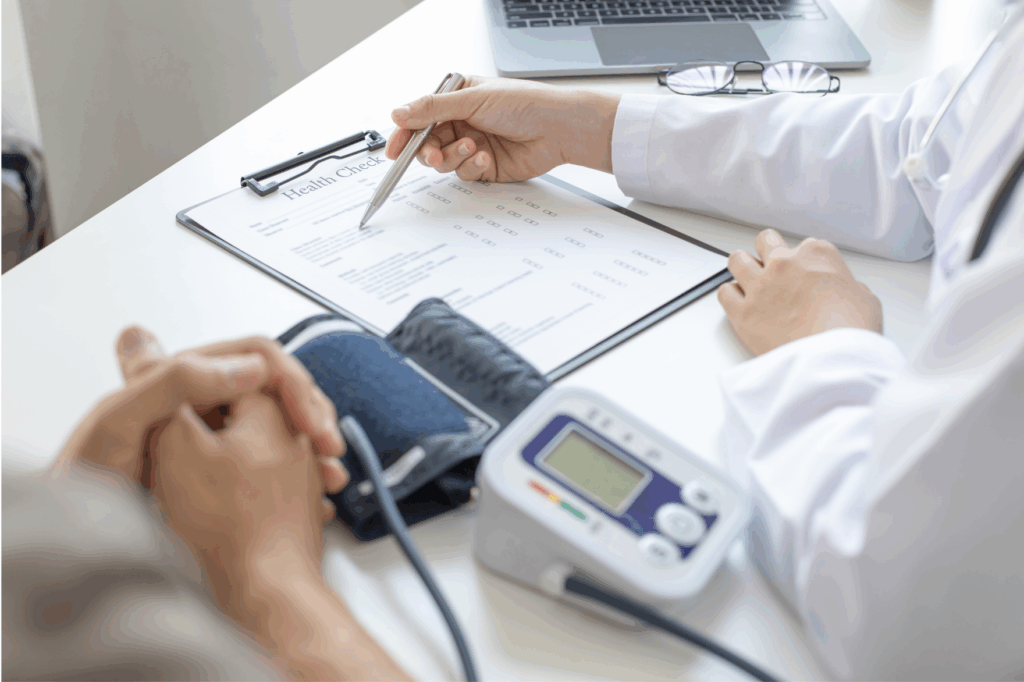
Vital signs: pulse, blood pressure, temperature, respiratory rate |
X |
X |
| 3 |
Eye: vision check |
X |
X |
| 4 |
Comprehensive examination with a general internal medicine specialist: … (General Internal Medicine Consultation: …) |
X |
X |
| 5 |
ENT check: examine and consult ENT issues with an ENT Specialist |
X |
X |
| 6 |
Gynecology examination: perform manual breast examination and consult breast issues |
|
X |
| 7 |
Full blood count: reviews of infection, anemia, platelet count-related disorder, leukemia, etc. |
X |
X |
| 8 |
Fasting glucose: diabetes screening |
X |
X |
| 9 |
HbA1C: Helps diagnose diabetes or prediabetes (HbA1c (Glycated Hemoglobin): helps diagnose diabetes mellitus and prediabetes) |
X |
X |
| 10 |
Cholesterol total: helps evaluate the risk of atherosclerosis, cardiovascular risk (Cholesterol total: evaluate the risk of atherosclerosis) |
X |
X |
| 11 |
Triglyceride blood fat: helps evaluate the risk of atherosclerosis, cardiovascular risk (Triglyceride: evaluate the risk of atherosclerosis) |
X |
X |
| 12 |
LDL-c blood lipids: help assess the risk of atherosclerosis, cardiovascular risk (LDL-c: evaluate the risk of atherosclerosis) |
X |
X |
| 13 |
HDL-c blood lipids: help assess the risk of atherosclerosis, cardiovascular risk (HDL-c: evaluate the risk of atherosclerosis) |
X |
X |
| 14 |
Kidney function: evaluate the risk of kidney dysfunction |
X |
X |
| 15 |
Blood Urea Nitrogen: an additional test to assess kidney function by measuring the amount of urea nitrogen in the blood. |
X |
X |
| 16 |
Liver enzymes: investigate different causes of liver injury |
X |
X |
| 17 |
Liver enzymes: investigate different causes of liver injury |
X |
X |
| 18 |
GGT: investigates liver cell damage due to various causes (Liver enzymes: investigate different causes of liver injury) |
X |
X |
| 19 |
Total Bilirubin: A component of the comprehensive liver function test used to assess overall liver health. |
X |
X |
| 20 |
Direct bilirubin: Helps detect and monitor the progression of other liver diseases such as hepatitis, cirrhosis, gallstones, and cholangitis. |
X |
X |
| 21 |
Indirect Bilirubin: Used to screen for blood-related disorders such as hereditary anemia and hemolytic anemia. |
X |
X |
| 22 |
Uric Acid: used to screen for protein metabolism disorders and gout. |
X |
X |
| 23 |
Hepatitis B screening (HBsAg): checks to see if you are infected with the hepatitis B virus. If positive, you may have acute or chronic hepatitis B. (This test checks if you are currently infected with the hepatitis B virus. A positive result may indicate acute or chronic hepatitis B.) |
X |
X |
| 24 |
Hepatitis B screening (HBsAb): This test checks for antibodies against the hepatitis B virus. If positive, you are likely immune to hepatitis B due to vaccination or past infection. (This test detects antibodies against the hepatitis B virus. A positive result means you are likely immune to hepatitis B due to vaccination or past infection.) |
X |
X |
| 25 |
Hepatitis B screening (anti-HBc total) anti-HBc total: test for antibodies against the hepatitis B virus. If positive, you have been exposed to the hepatitis B virus – may be current, resolved, or chronic. (A test for antibodies against the hepatitis B virus. If positive, it indicates previous exposure to the virus, the infection may be current, resolved, or chronic) |
X |
X |
| 26 |
Hepatitis C screening (anti-HCV): This test detects antibodies to the hepatitis C virus. If positive, you may have had or are currently infected with the hepatitis C virus. Further testing is needed to confirm. (This test detects antibodies to the hepatitis C virus. A positive result suggests past or current hepatitis C infection, requiring further tests to confirm.) |
X |
X |
| 27 |
Thyroid function TSH (Thyroid-Stimulating Hormone): Assesses thyroid function and helps detect disorders such as hyperthyroidism or hypothyroidism. TSH (Thyroid-Stimulating Hormone): Assesses thyroid function and helps detect disorders such as hyperthyroidism or hypothyroidism. |
X |
X |
| 28 |
Urinalysis: … |
X |
X |
| 29 |
Digital Chest X-ray: evaluates pulmonary abnormalities such as pneumonia, pulmonary tuberculosis, bronchitis, and suspected lung masses or tumors. |
X |
X |
| 30 |
Electrocardiogram (ECG): abnormal findings commonly seen in high blood pressure, heart disease, arrhythmias, etc. |
X |
X |
| 31 |
Thyroid ultrasound (Thyroid US): examination of thyroid disease and cancer (Thyroid disease and thyroid cancer) |
X |
X |
| 32 |
Breast US: breast disease and breast cancer |
|
X |
| 33 |
Abdominal ultrasound (Abdominal US): examines organs: liver, gallbladder, pancreas, kidneys, bladder, uterus, ovaries, etc. (Organs involved: liver, gallbladder, pancreas, kidneys, bladder, uterus, ovaries, etc.) |
X |
X |
| 34 |
Gynecology examination: Perform manual breast examination and consult breast issues; Consult common gynecological issues |
|
X |
| 35 |
Pap smear: Cervical cancer screening |
|
X |
| 36 |
Vaginal wet mount: Check for infection, yeast infection, etc. (Sexually inactive females: apply this test instead of PAP smear) |
|
X |