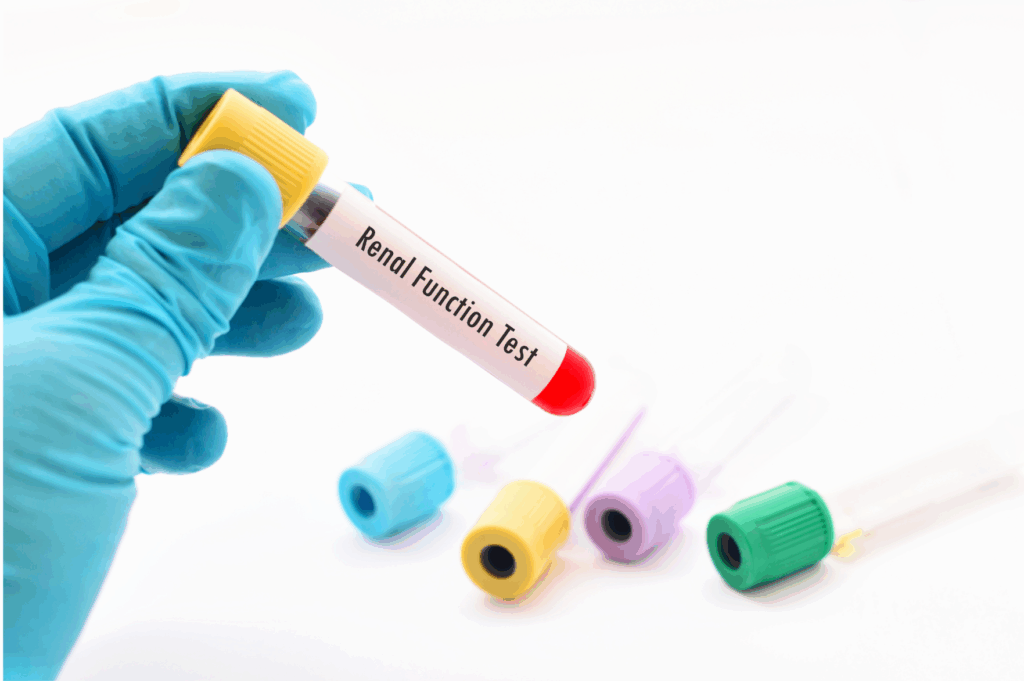
Have you ever wondered: “Are my kidneys still healthy?” Most of us only notice when we see swollen feet, fatigue, frequent urination at night… By then it is usually too late! Two simple numbers in a blood test – serum creatinine and eGFR – is the earliest “informant” to warn you about your kidney health.
- What is Creatinine? Why is it important?
Creatinine is a waste product produced by the muscles every day. Healthy kidneys filter it and excrete it in the urine. When the kidneys are damaged, creatinine “gets stuck” in the blood → its concentration increases.
- Creatinine values are considered normal when they fall within reference range printed on your test result sheet. This range may vary between laboratories, but is generally within 60-110 µmol/L for men and 45-90 µmol/L for women. The most important thing is to compare your results with the reference range of the place where you had the test.
- The elderly, thin people, pregnant women… can be a little shorter.
If your creatinine is slightly elevated (e.g. 120–150) and you have no symptoms, don’t be complacent! It could be a sign that your kidneys are “calling for help” in stages 2–3, and can still be saved.
- eGFR – “Golden index” to assess kidney function
eGFR (estimated Glomerular Filtration Rate) = estimated glomerular filtration rate. This is a number that tells you how well your kidneys are filtering your blood (in mL/min/1.73m²).
- ≥ 90: Normal kidney function (Stage 1 if there are other signs of kidney damage)
• 60–89: Mild decline in kidney function (Stage 2 if there are other signs of kidney damage). In the elderly, this may be a physiological decline in kidney function.
• 30–59: Moderate chronic kidney failure (Stage 3)
• 15–29: Severe chronic kidney failure (Stage 4)
• < 15: End-stage renal failure (Stage 5)
eGFR is automatically calculated from three parameters: blood creatinine, age, gender and race. Just one blood stick is enough to know whether the kidneys are in the “green, yellow or red zone”.
- Relationship between creatinine and eGFR
You can imagine it simply like this:
- Increased creatinine → decreased eGFR (like stagnant wastewater in the filtration system)
- The higher the creatinine, the lower the eGFR → the more "tired" the kidneys
A common practical example of a doctor: A patient, male, 58 years old, went for a routine check-up and found creatinine 135 µmol/L (slightly high), eGFR 52 → detected stage 3 kidney failure due to 6 years of diabetes. Fortunately, thanks to early detection, the patient controlled blood sugar + blood pressure well, significantly slows disease progression, after 3 years eGFR is still 48, no need for dialysis.
- Who is susceptible to kidney failure without knowing it?
- People with diabetes, long-term high blood pressure
- Overweight, belly fat
- Smoking and drinking a lot of alcohol
- Family has someone with kidney disease
- Regular use of painkillers (NSAID group), herbal medicines of unknown origin
- What to do to protect your kidneys today?
- Drink enough water (1.5–2 liters/day, unless restricted by a doctor)
- Eat a low-salt diet (<5g salt/day), reduce fried foods and soft drinks.
- Good control of blood sugar (HbA1c < 7%) and blood pressure (< 130/80)
- Exercise regularly 30 minutes/day
- Regular health check-ups every 6-12 months, creatinine + eGFR test even if you don't feel tired
Conclusion
The kidneys do not speak when they are in pain, they just “silently” weaken. Creatinine and eGFR indexes are the “voices” of the kidneys. Do not wait until you urinate less, have edema, or have difficulty breathing to rush to the doctor. A blood test can help you save on the high cost of dialysis and keep your healthy life for another 10-20 years. Healthy kidneys – A new, complete life!
Dr. TRAN PHUONG THAO, USMLE Step 3, specializing in General Internal Medicine, Gastroenterology and Hepatobiliary Medicine.